
The NCMJ stepped outside of the Triangle to host its 2026 Symposium, titled “Pharmacists as Catalysts for Better Health,” at Campbell University in Buies Creek, North Carolina. A crowd of nearly 100 pharmacists, educators, public health professionals, and students joined for a day of discussion about pharmacists’ evolving roles in health care, best practices for cross-disciplinary collaboration, and the future of the pharmacy workforce for recent and upcoming graduates.
This year’s event, co-hosted by the UNC Eshelman School of Pharmacy and Campbell University College of Pharmacy and Health Sciences, centered around the NCMJ’s 2025 issue, “From Access to Outcomes: Pharmacists as Catalysts for Better Health.”1
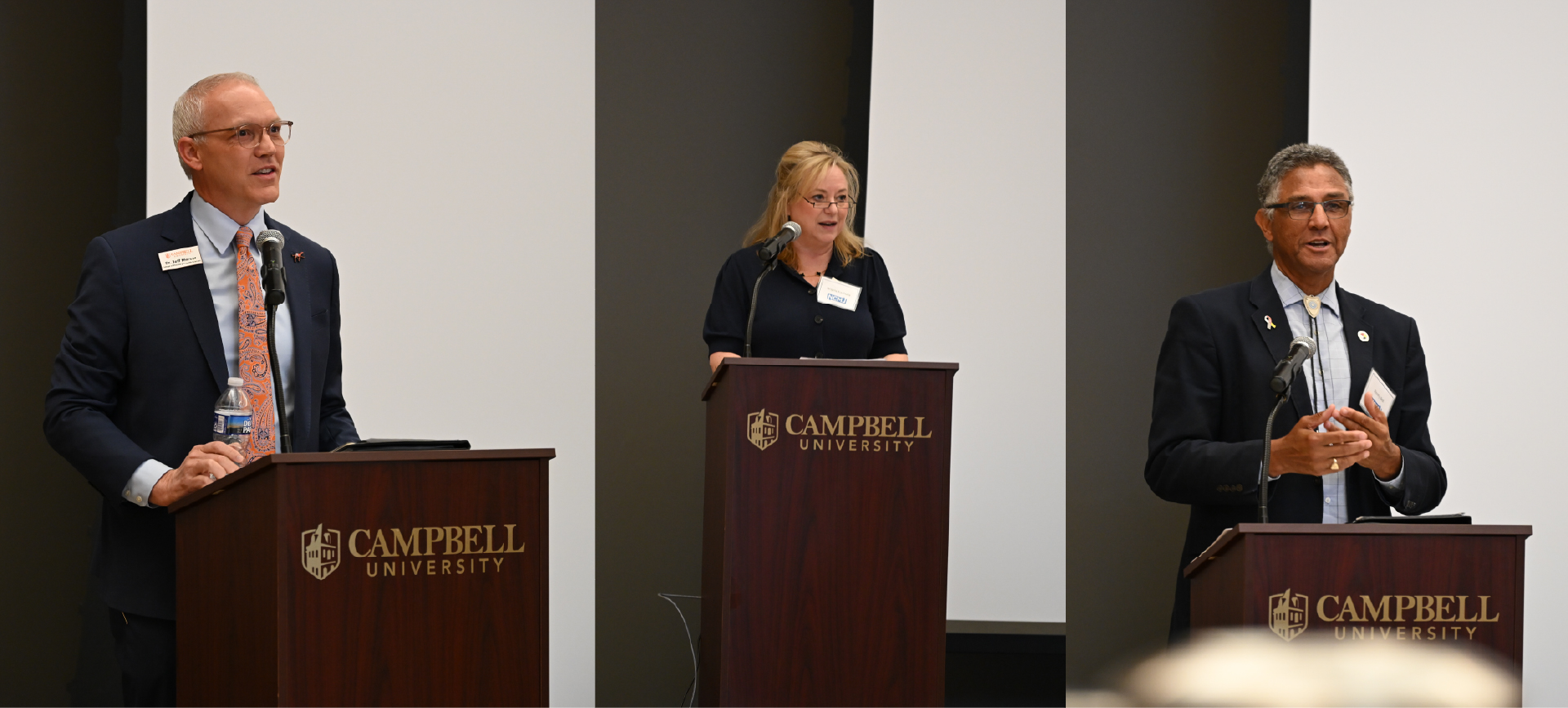
To kick off the day, the event’s three co-hosts gave brief remarks about the Symposium, the NCMJ issue that preceded it, and the importance of hosting the event in rural North Carolina. Pictured, left to right:
Throughout the event, speakers and attendees emphasized that pharmacists are not just “dispensers of medication” at the periphery of care delivery. They are central to access to care and are key points of contact within the health care system for many North Carolinians.
The opening panel set the stage with a focus on policy, highlighting how recent changes have expanded pharmacists’ ability to deliver care. Senator Gale Adcock and Representative Heather Rhyne pointed to new authorities like vaccination, independent prescribing, and collaborative practice that are creating meaningful opportunities to improve access, particularly in underserved communities. Dr. Leigh Foushee spoke from the perspective of the North Carolina Association of Pharmacists (NCAP), discussing how the profession approaches policy advocacy and how the NCAP sees recent changes impacting practice.
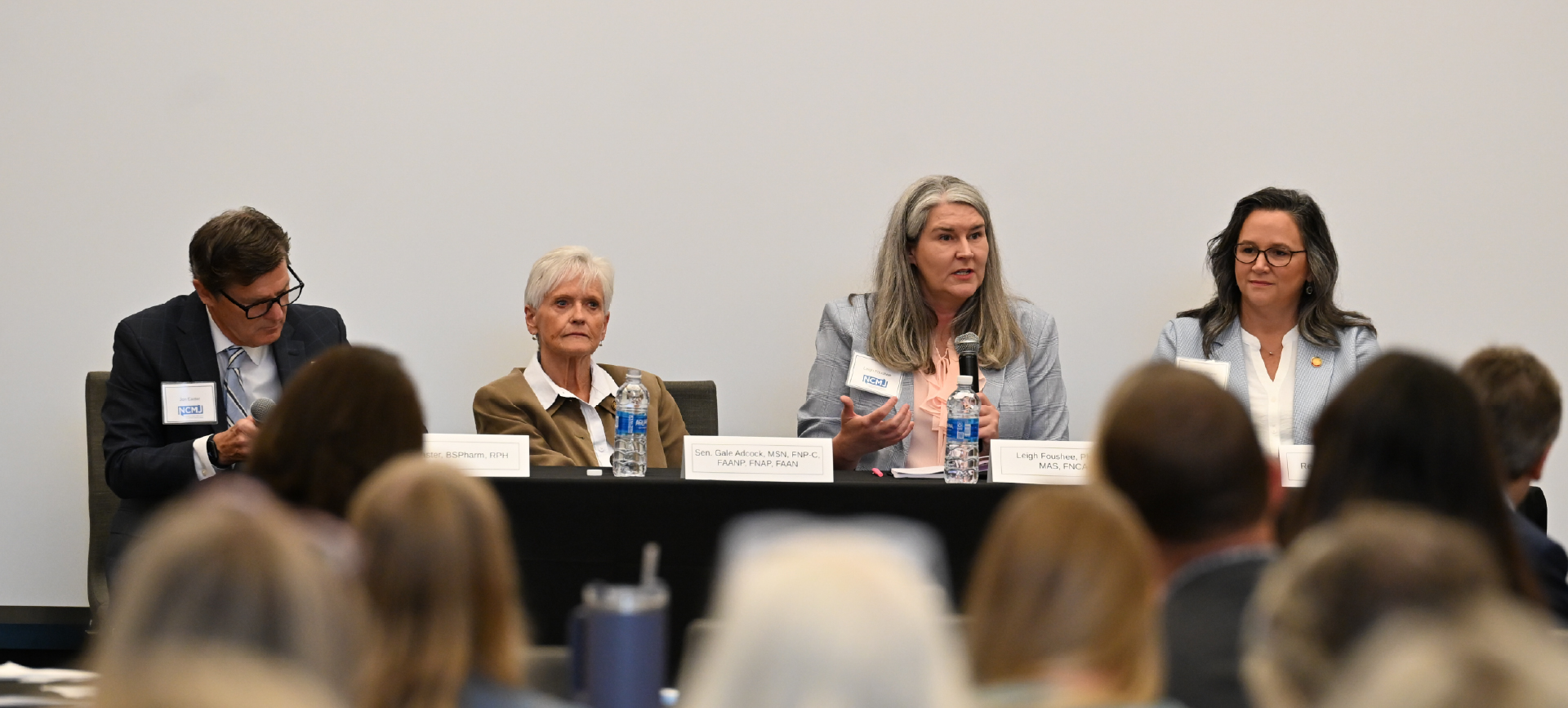
Panel: Policy Opportunities to Expand Access to Care for Rural and Underserved Patients
From left to right:
Building on this policy foundation, the second panel turned to rural health transformation, examining how technology and innovative care models are reshaping service delivery. Dr. Franklin Roye discussed his work with independent pharmacies reimagining their business models, and all speakers discussed considerations for pharmacists as North Carolina launches its Rural Health Transformation Program.
In the afternoon, the community pharmacy panel highlighted how local pharmacy owners are reimagining their roles through expanded service offerings. Dr. Ijeoma Uwakwe shared how her pharmacy has integrated diabetes prevention and management services, while Arif Khan discussed how Blue Cross NC’s More Than a Script program is seeking to improve chronic care management and effective medication use.
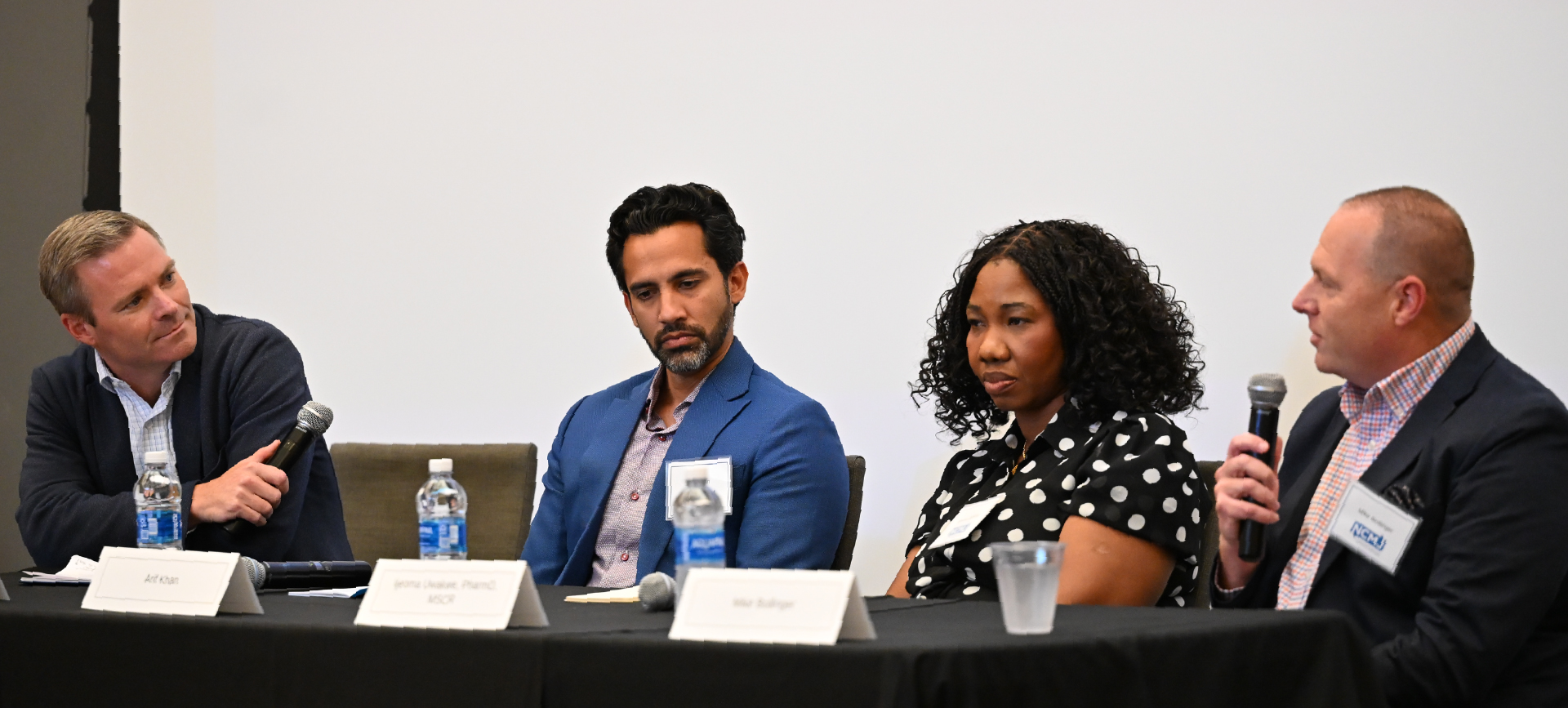
Panel: Transforming Community Pharmacy into a Community Health Hub:
Throughout the 2026 NCMJ Symposium, speakers also spoke about the importance of collaboration across disciplines. Dr. Tom Wroth, a practicing family physician, and Senator Gale Adcock, a nurse by training and Fellow of the National Academies of Practice (a designation recognizing significant impact on interprofessional health care), spoke from their perspectives about the ways they see interdisciplinary collaboration working well. As a pharmacist leading a health department, Dr. Tracey Simmons-Kornegay spoke about her personal experience incorporating pharmacy services into rural public health.
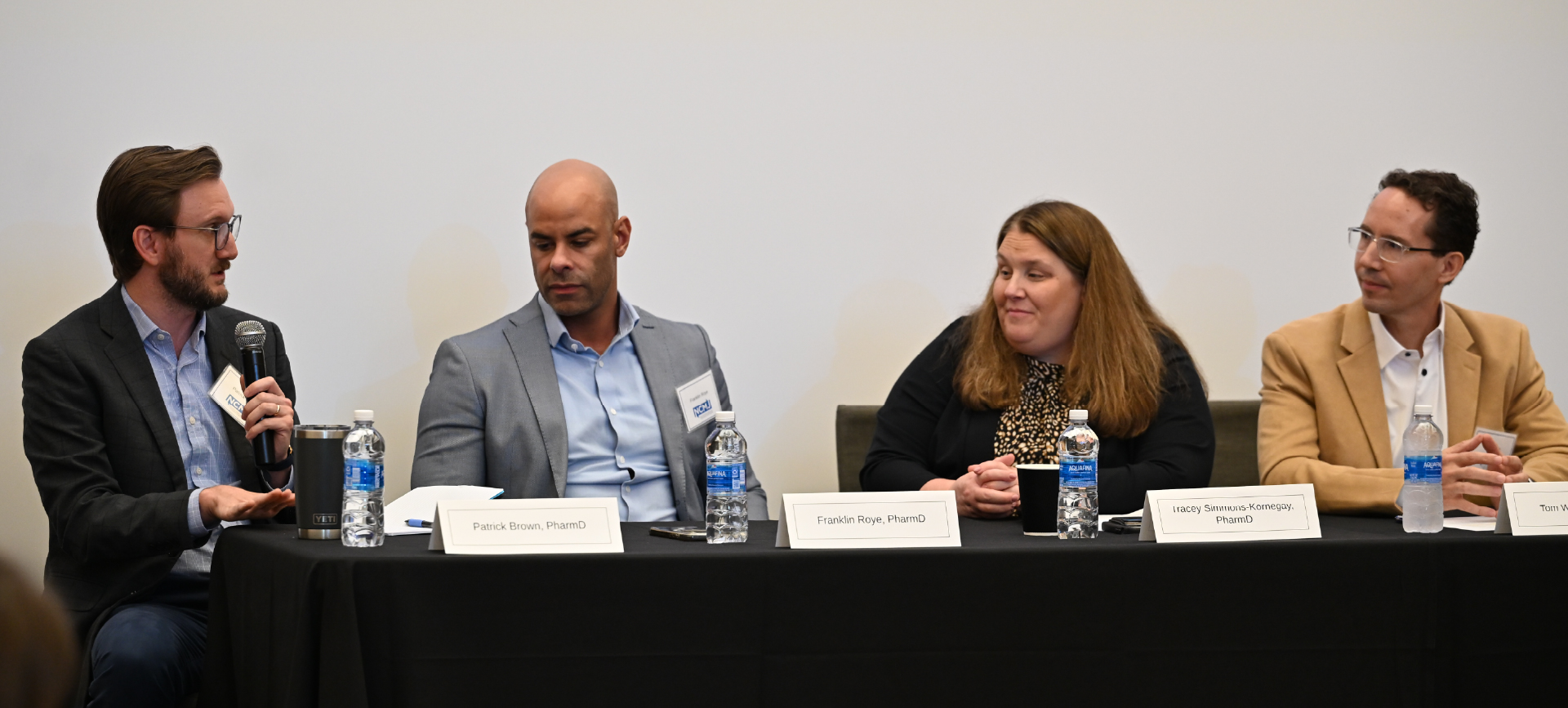
Panel: Bolstering Rural Health Transformation and Access to Care Through Expanding Pharmacy Services
From left to right:
Parked outside of the event venue, two mobile units offered attendees a tangible example of innovative care bringing new opportunities to providers and patients alike. One of AmeriHealth Caritas’ Mobile Wellness and Opportunity Centers and one of Campbell University’s Mobile Health and Education Clinics were on site to provide tours of the units and demonstrate how they expand access to care in rural areas.
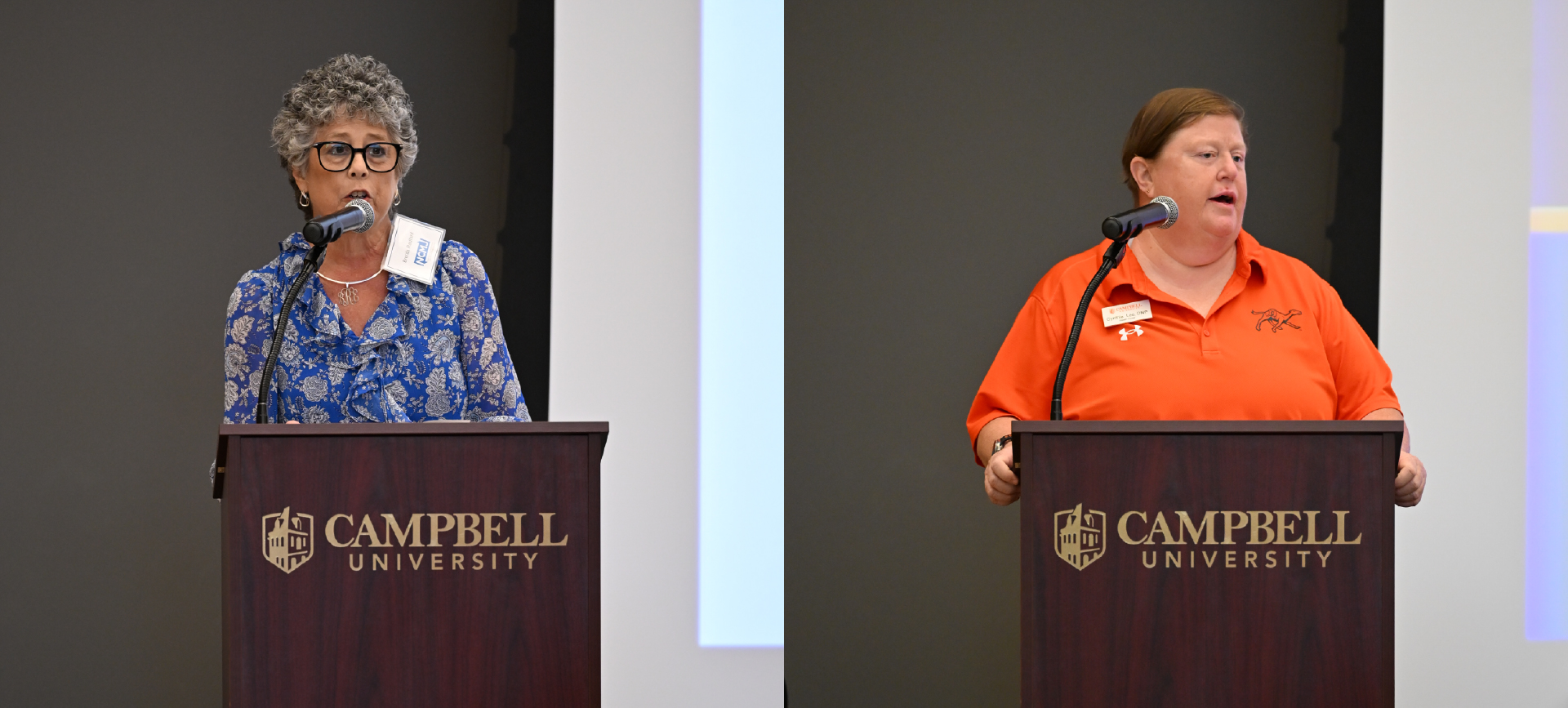
Brenda Radford, the Director of Member Engagement at AmeriHealth Caritas NC, and Cynthia Lee, DNP, FNP, the Assistant Director of Community and Global Health at the Campbell University Jerry M. Wallace School of Osteopathic Medicine, introduced the audience to their mobile units and discussed how they provide care in rural and underserved areas.
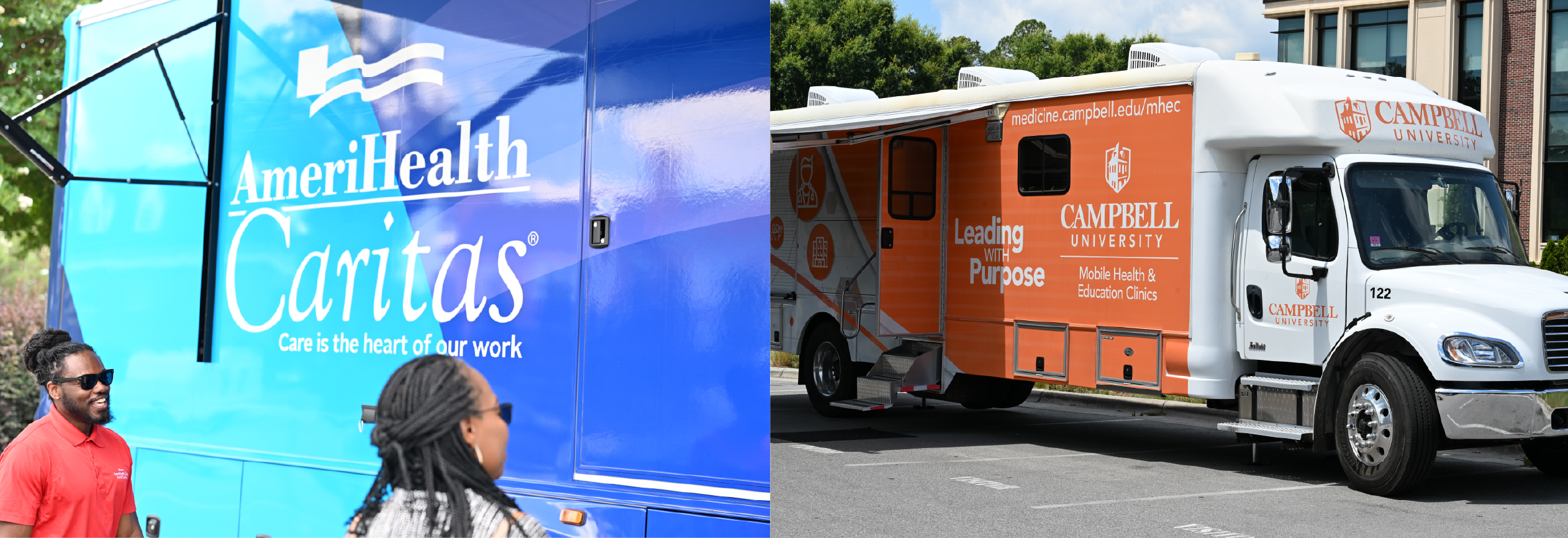
AmeriHealth Caritas Mobile Wellness and Opportunity Center and Campbell University Mobile Health and Education Clinic
Toward the end of the day, conversation shifted toward students and the future of the pharmacy workforce. Before a final Q&A, Mike Bollinger spoke in detail on the community pharmacy panel about independent pharmacy business models. He and Dr. Ijeoma Uwakwe both spoke about the unique and often challenging flow of money into and out of a pharmacy, and how pharmacy owners can be innovative to improve their bottom lines.
In a final audience Q&A, Stephanie Kiser and Dr. Beth Mills fielded questions about important considerations for students preparing to enter the pharmacy workforce. They spoke about pressures new pharmacists will face and opportunities to enter the workforce, especially in rural and underserved settings.
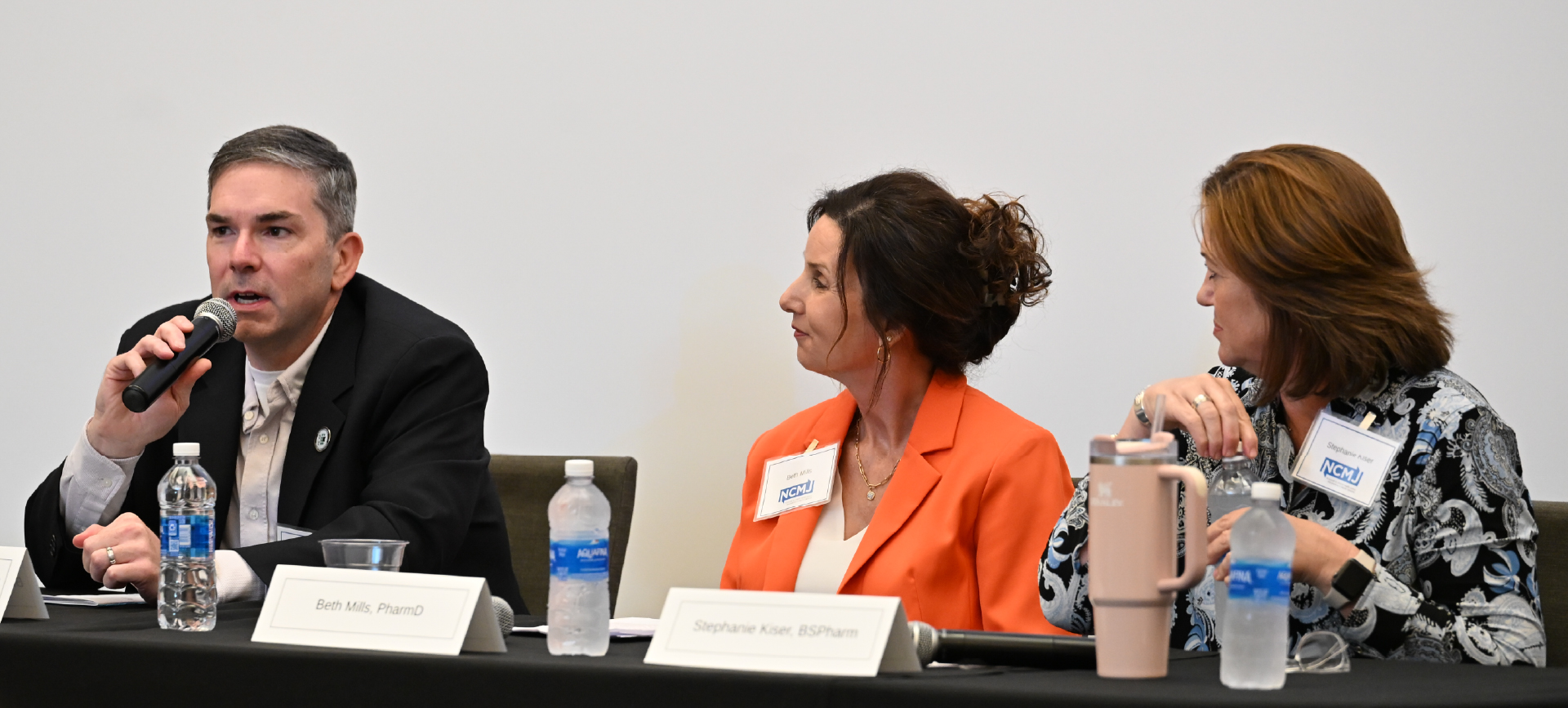
Q&A: Training the Future Pharmacy Workforce Highlighting students
To close out the event, attendees joined UNC and Campbell student interns for a reception to learn about their work with rural pharmacies through the Blue Cross NC More Than a Script program and UNC’s RuralRx initiative.
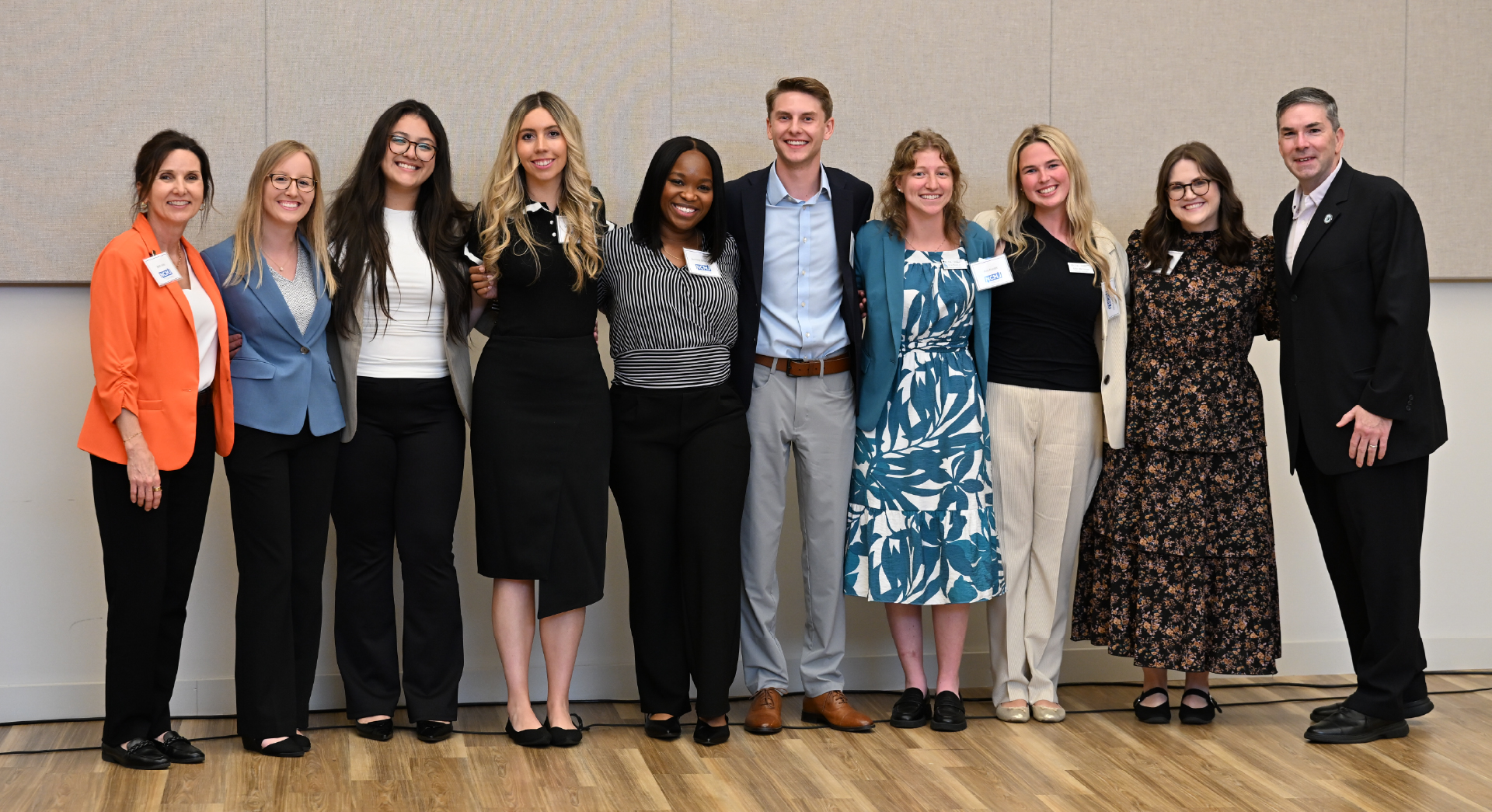
Whether shaping policy, expanding services, leveraging technology, or training the next generation of providers, the work highlighted at the 2026 NCMJ Symposium made it clear that transformation for the pharmacy profession is already underway. The ongoing challenge—and the opportunity—lies in sustaining momentum to build a more accessible, connected, and patient-centered health care system.
Published by the North Carolina Institute of Medicine, the NCMJ is a journal to inform health policy and practice in North Carolina. The NCMJ publishes double-blind, peer-reviewed original research articles focused on health care and health policy issues in North Carolina; invited commentaries; and letters to the editor & correspondence pieces. Every year, the Journal hosts a symposium to explore a health care topic and generate conversations that reach across professions, build new connections, and highlight the important work happening around the state of North Carolina. More information about the NCMJ can be found at www.ncmedicaljournal.com.
_______________________________________________
Written by
Brady Blackburn
Communications Director, NCIOM
Managing Editor, NCMJ
_______________________________________________
Photos by Meredith Blalock, Director of Communications and Marketing, Campbell University College of Pharmacy and Health Sciences